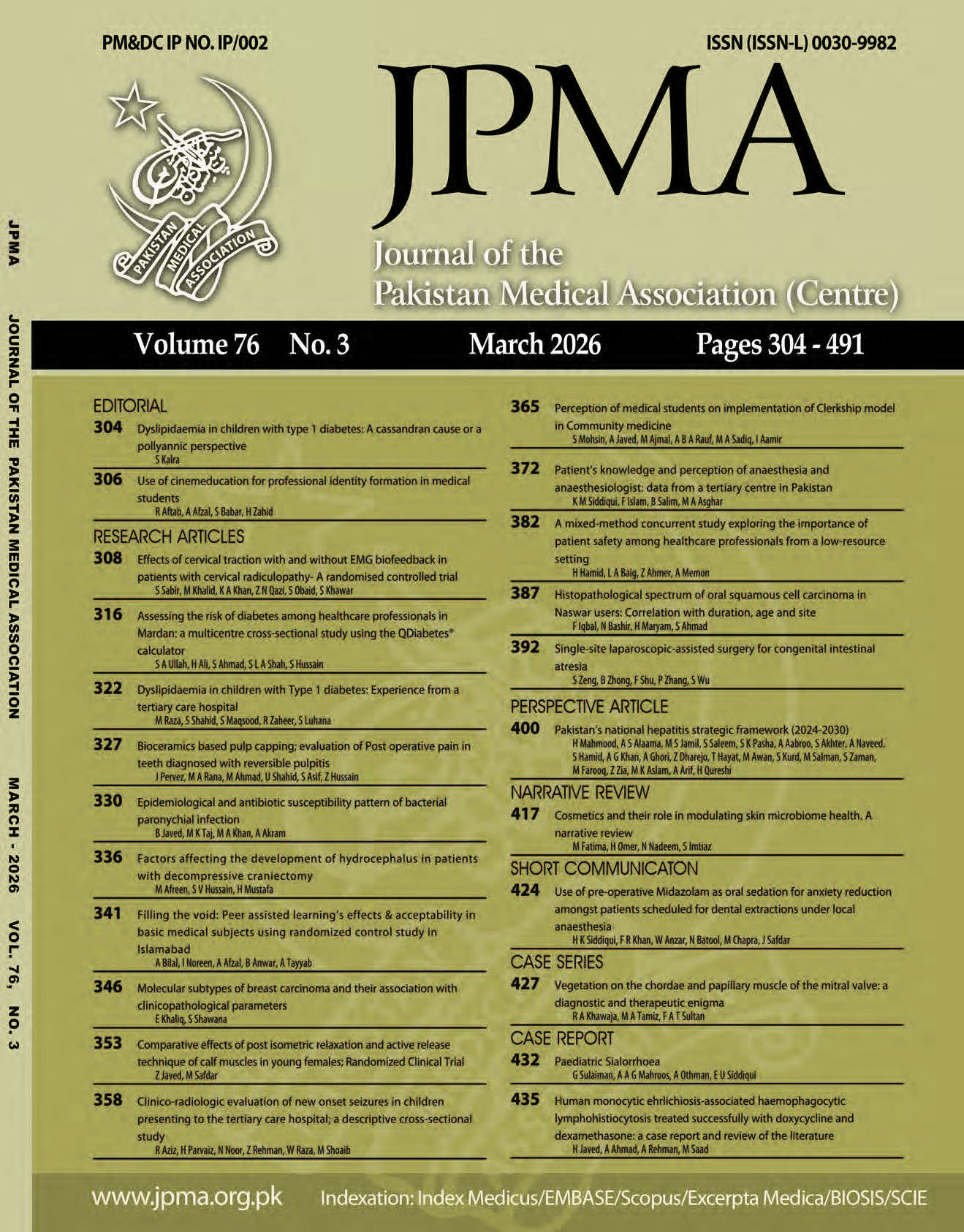
Filling the void: Peer assisted learning’s effects & acceptability in basic medical subjects using randomized control study in Islamabad
DOI:
https://doi.org/10.47391/JPMA.21715Keywords:
Peer groups, Adult learning, Academic performance, Active learning, CurriculumAbstract
Objectives: To assess the effectiveness and acceptability of peer-assisted learning in basic science subjects among undergraduate medical students exposed to an integrated curriculum.
Method: The randomised control study was conducted at Fazaia Medical College, Air University, Islamabad, Pakistan, from January to August 2023, and comprised second year medical students. One-third of the participants were included in the intervention group, while the rest were placed in the control group. A total five groups were formed, with four tutees led by one tutor in each group. For five weeks, a two-hour weekly session was carried out as part of the intervention by the tutors in gastrointestinal tract and Nutrition module (GIT&Nut module). The post module exam scores of the two groups were compared to assess the effectiveness of peer-assisted learning. Post-intervention feedback questionnaire was distributed to the intervention group to assess its acceptability in basic sciences. Data was analysed using SPSS 23.
Results: Of the 102 students 97(95%) students had mean age 20±1 years, 67(70%) were females. Mean score in the target module of intervention group was higher (58.9±25.4) than controls (45.6±29.9), but the result was not significant (p=0.14). Feedback indicated that more than two-third 58(75%) of the participants recognised peer-assisted learning as effective and easy strategy (p<0.001).
Conclusions: Peer-assisted learning was found to be an effective learning strategy by majority of the students despite showing no significant improvement in the scores of the interventional group.
Key Words: Peer groups, Adult learning, Academic performance, Active learning, Curriculum.
Downloads
Published
How to Cite
Issue
Section
License
Copyright (c) 2026 Journal of the Pakistan Medical Association

This work is licensed under a Creative Commons Attribution 4.0 International License.


